

In 1987, Yamaha introduced the Disklavier reproducing piano to North America.
Early models
Prior to the introduction of the Disklavier in the United States, Yamaha Corporation of Japan debuted an upright reproducing instrument in 1982 called "Piano Player" It featured a record-and-playback system, floppy disk storage of performance data, and the ability to playback multi-track performance files that included instrumental tracks whose sound was reproduced by a tone generator. There was also an upright model sold in Japan in 1985 known as the MX100R.
The first model introduced in the United States was the studio model upright MX100A in 1987 (easiest way to identify this model is the LED Display on the front of the piano is red whilst all later models were changed to green or as in the case of the current E3, a white display). Shortly thereafter, it was slightly modified and renamed MX100B. This early upright was followed by the first grand piano model in 1989. This early grand piano version of the Disklavier lacked an official model designation and has become known as the Wagon Grand by virtue of the fact that the control unit was built into a 30-inch (760 mm) tall cabinet on wheels, this model in Japan does have a model designation of PPG-10R and it has been called DKW10.
A third, early model series was introduced in the early 1990s in small uprights and was known as the MX80 series. Like the MX100A, MX100B, and Wagon Grand, the MX80 recorded on 3.5-inch (89 mm) double-density floppy disks and recorded performances in a Yamaha-proprietary file format called E-SEQ, a forerunner of the subsequent industry-standard file format known as Standard MIDI Files. All of these instruments featured ports for MIDI input and output.
Technical innovations found on these early model instruments included hammer sensors for recording (MX100A, MX100B, and Wagon Grand), recording and playback of incremental pedal data (Wagon Grand), and moving pedals during playback (all models).
The Disklavier is fundamentally a traditional, acoustic piano with a built-in record-and-playback system. The record-and-playback system and its related features have changed substantially over the years, but one aspect of the Disklavier has remained constant: The Disklavier system has always been offered as a factory-installed system – never as a retrofit for existing pianos.
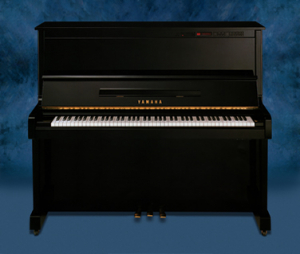
The first model Disklavier was the MX100A, which was available in a studio model upright called the U1. The control unit was built into the cabinet.The MX100A featured a remarkably sophisticated recording system for its day, a system that included hammer sensors — an innovation that was not available on most player piano systems from other companies at that time. Pedal sensors on these early instruments, however, were limited to recording only two values: on and off (or fully down and fully up).
This early Disklavier model included fundamental features that have been included on every Disklavier since - such as tempo control, transposition, and connectivity with external MIDI devices.
In a short period of time, the MX100A was superseded by the MX100B. The most noticeable difference was the color of the LED display on the control unit, which was changed from red to green.
Both the MX100A and the MX100B pre-dated the industry-standard song file format known as Standard MIDI Files (SMF), which is the format used today. For this reason, these early Disklaviers recorded in the proprietary MIDI format from Yamaha known as E-SEQ. Although modern Disklaviers do not record in E-SEQ format, they will read this older type of song file and even convert E-SEQ to SMF. E-SEQ song files were stored on double-density (DD) 3½ inch floppy disks.
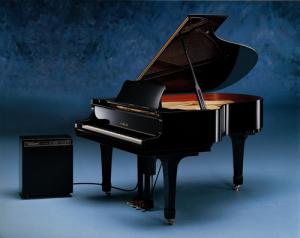
Starting in 1989, Yamaha began marketing the Disklavier system in the various grand piano models that were available at the time. The control unit had a rather substantial power supply that required it to be housed in a 30" cabinet on wheels that was often referred to as a wagon. Lacking a more formal model designation, these instruments became informally known as Wagon Grand Disklaviers.
Like the MX100A and MX100B, the Wagon Grand provided hammer sensors. It also featured 16 increments of pedal recording — an important step forward in the evolution of the instrument. Like the MX100A and MX100B, the Wagon Grand recorded on DD floppy disks in E-SEQ format.
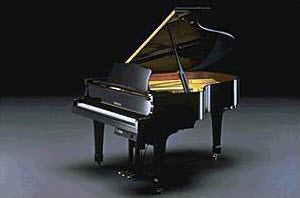
1990's - MX88
The Yamaha MX88-T
belongs to the historic "First Generation" of Yamaha Disklavier pianos, specifically categorised under the MX80 series line.
Its history marks Yamaha’s early 1990s expansion to bring their newly invented acoustic reproducing piano technology into classrooms, institutional practice rooms, and decorative living spaces.
1992 - Mark II and Mark IIXG
A number of consumer and standard models of Disklavier were introduced in the early-to-mid 1990s. Most noteworthy were the Mark II and Mark IIXG systems. These were available in the studio model and U1 upright, as well as in most sizes of grand pianos.
The first of these was the Mark II, which made its debut in 1990. In the case of the upright version, the control unit was built into the cabinet, as it was in the case of the MX100A and MX100B. The Mark II control unit, however, was much more sophisticated, offering many more options for copying song files, MIDI configuration, and so forth. The instrument recorded on DD floppy disks in E-SEQ format, but was able to play song files in the SMF format known as Type 0.
The Mark II control unit for grand pianos did not have a wagon control unit. Instead, a relatively small control unit was devised for this instrument and mounted under the keys.
The Mark IIXG followed the Mark II in 1992. Its control unit was a bit smaller but was packed with many new features, including:
– Built-in tone generator with 128 General MIDI (GM) voices and drum kit, as well as the Yamaha extended GM voice set known as XG.
– Multitrack recording.
– Recording in SMF Type 0 format.
– Playback of both SMF Type 0 and Type 1 song files.
– Support for both DD and HD (high density) floppy disks.
– Conversion of song files between E-SEQ and SMF.
– Built-in memory for storing song files.
– More features for song file management.
– Improved support for MIDI interaction with computers.
– Support for future firmware upgrades.
During the 1990s, it was possible to obtain a kit that would upgrade a Mark II to a Mark IIXG.
Disklaviers with Silent Systems
During the era of the Mark II and the Mark IIXG, a number of upright (U1) versions of the Disklavier were introduced that were equipped with a Silent system. This system provided a mute rail that, when engaged, would allow a full keystroke but prevent the hammer from hitting the string. This made it possible for a pianist to play the instrument with headphones on, listening to an advanced digital piano sample.
The Silent system was not available in grand piano models until the Disklavier PRO was released.
1998 - Disklavier PRO
An important historical moment in the evolution of the Disklavier occurred in 1998. The new PRO Disklavier — with a Mark IIXG control unit — offered unprecedented recording accuracy and playback realism.
With improved solenoids and a new moving magnet sensor and key sensor servo, the Disklavier PRO was capable of recording and playing back performance data with greater resolution than the MIDI spec normally accommodates.
Prior to the Disklavier PRO, all models of Disklavier were somewhat limited with respect to their playback dynamic range. Thunderous chords would be played back a bit softer than recorded and whisper-quiet playing would be played back a bit louder.
The Disklavier PRO, on the other hand, was capable of reproducing the full range of dynamics — and it did so with 8 times the resolution of normal MIDI data, recording hammer velocity, key down velocity, and key up velocity on a high resolution scale of 0-1023. The instrument used normally unused MIDI controller messages combined with key aftertouch messages to store the extra bits of resolution in a Type 0 Standard MIDI File. This high-resolution performance data was called extended precision (XP) data.
With the introduction of the Disklavier PRO, pedals were no longer limited to 16 increments but were recorded on a scale of 0-127, thus taking advantage of the full granularity of the MIDI specification. The PRO even recorded and accurately reproduced brushed notes – keys that were moved slightly during the performance without the hammers actually hitting the strings.
Available only in C3 (6’1″) and larger grand pianos, the Disklavier PRO looked outwardly like any other Mark IIXG Disklavier. Its control unit provided the same user functions as other Mark IIXG pianos. There was one important difference, however: The Mark IIXG PRO was the first Disklavier grand to include the Silent system.
Within three years of the initial release of the Disklavier PRO, a firmware upgrade added the capability of recording and playing back MIDI performances that were synchronized with MIDI Time Code (MTC). When used with a converter, Disklavier PRO recordings could be synchronized with video using industry-standard SMTPE time code.
2000 - Disklavier PRO 2000
In 2000, in celebration of the 100th anniversary of the very first Yamaha piano, Yamaha presented the world with a concept piano that demonstrated remarkable, future possibilities. Called the Disklavier PRO 2000 it was a C7 (7’6″) piano with a Disklavier PRO system installed, housed in a case that was based on the modern design called Neo.
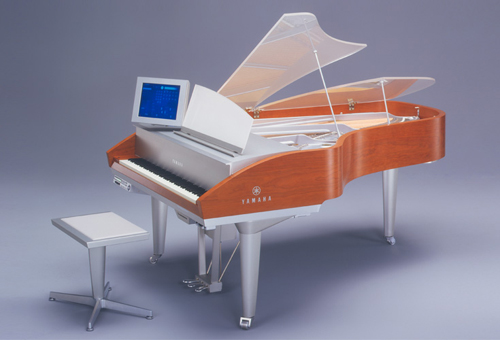
The PRO 2000 was visually noteworthy for its clear, acrylic glass, split lid and built-in computer monitor. Indeed, the piano came with a Windows 98 PC mounted underneath and connected to a touchscreen monitor that was positioned to the left of the clear music desk.
In addition to providing video-synchronized performances, the PRO 2000 also included score-following software called Home Concert 2000 from TimeWarp Technologies, as well as an advanced generator that included a built-in performance mode.
Only 9 of these instruments were produced, and they were later sold for $333,000, making them the most expensive Yamaha piano of all time.
In 2002, the Minnesota International Piano-e-Competition made history by enabling pianist Yefim Bronfman to judge the competition from Japan. The sonata round of the event was recorded with a Disklavier PRO concert grand piano with synchronized video. The video and MIDI files were uploaded over the Internet and reproduced for Bronfman in Japan, where he watched the contestants on a large screen and listened to a concert grand Disklavier reproduce the performances.
2002 - Mark III
In 2002, Yamaha updated the Disklavier once again, introducing the Mark III standard Disklavier (available in the U1 upright and most models of grands) and the Mark III PRO, available in the C3 and larger pianos.
The Mark III control unit and interface was nearly identical to that of the Mark IIXG. All standard models included the Silent system and improved playback that could be made quieter for the benefit of consumers who enjoyed listening with the volume turned very low.
In addition, the Mark III PRO offered double the resolution for the pedals, enabling recording on a scale of 0-255.
The Mark III control unit included something new: a CD drive in addition to the traditional floppy drive. The purpose of the CD drive was not to record MIDI data but rather to play back audio recordings, making three new features available:
1) Audio-sync Recording: This made it possible to play along with an audio recording and add a piano part that would be automatically synchronized on subsequent playback.
2) PianoSoft Plus Recordings: The CD drive was capable of playing a new type of format called PianoSoft Plus. These kinds of recordings contained normal instrumental and/or vocal audio on the left channel and MIDI data encrypted as audio on the right channel. During playback, the Disklavier would intelligently send the left-channel audio to both the left and right speakers and decode the right-channel audio for playback by the piano itself.
3) Smart PianoSoft Recordings: This made it possible for artists to create piano recordings that enhanced existing audio CDs. A Smart PianoSoft Recording consisted of two separate recordings: a commercial audio CD and a Disklavier MIDI recording on floppy disk, both played back in perfect sync.
2004 - Mark IV
The year 2004 saw the introduction of the Mark IV. Standard and PRO models were available on the C3 and larger grands. A high quality consumer model was available on the C2 (5’8″) grand and smaller pianos.
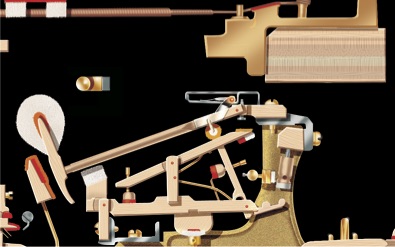
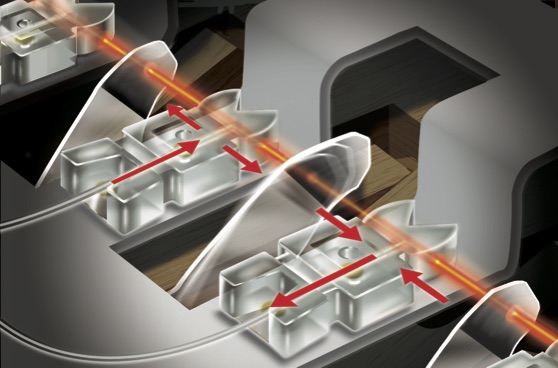
In addition to all of these technical improvements, the Disklavier feature set expanded considerably including:
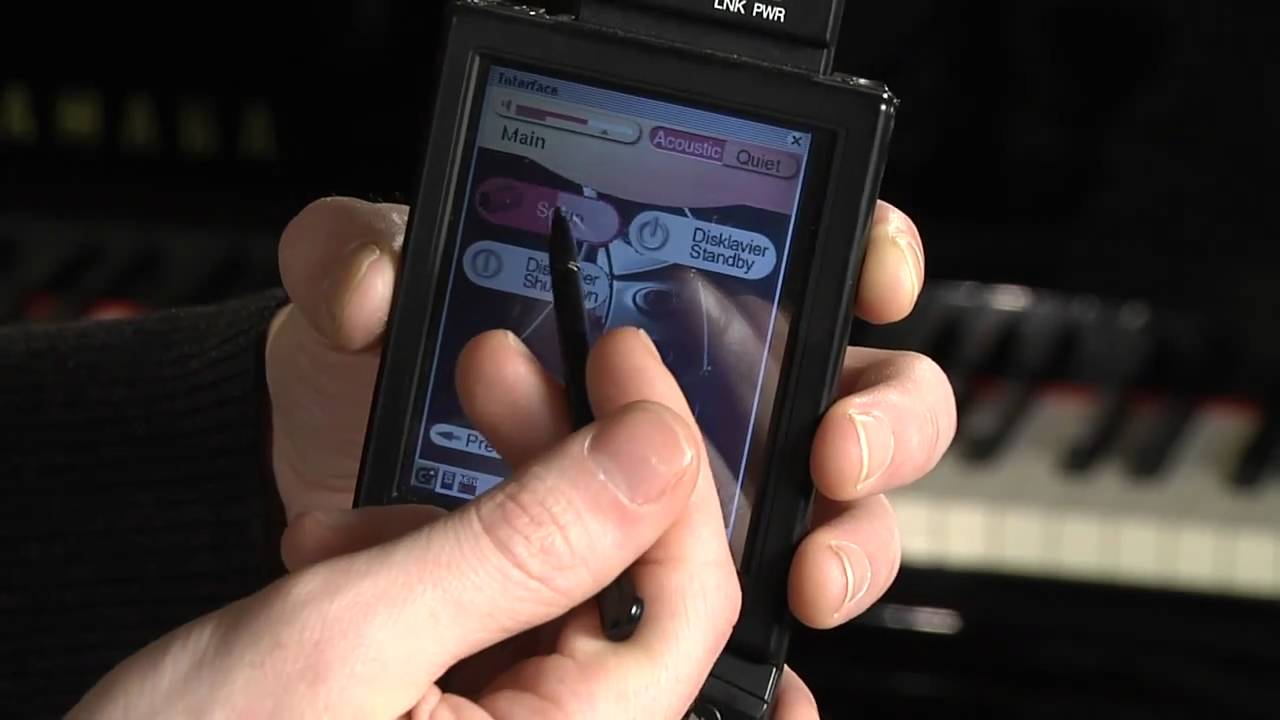
– An Ethernet port that connects the Disklavier to the Internet so that it can receive streaming performances from DisklavierRadio™. This network capability also provides access to firmware and feature upgrades. (Many years later, this connectivity feature made it possible for the instrument to receive RemoteLive broadcasts from DisklavierTV™.)
– Internal 80GB hard drive.
– USB port for connecting USB storage media such as flash drives.
– USB port for MIDI communications.
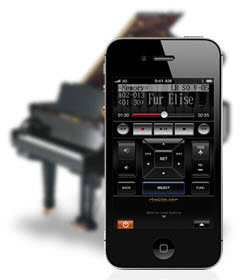
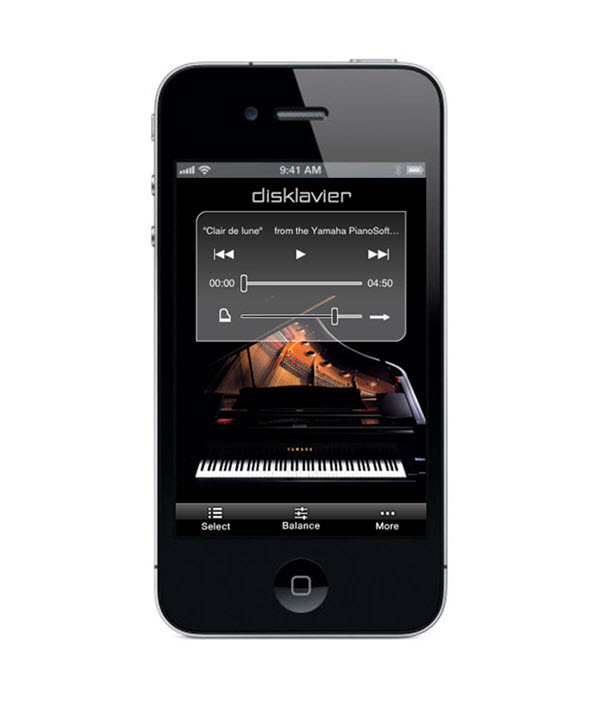 A few years later, Yamaha released a controller app for the Mark IV that runs on the iPhone, iPod touch, and iPad. The app provides access to the most commonly used features of the instrument.
2006 - In 2006, Yamaha introduced a peer-to-peer connectivity technology for the Mark IV called RemoteLesson. RemoteLesson makes it possible to connect up to four Mark IV and E3 Disklaviers together so that when you play any one of them, you simultaneously play the remote Disklaviers as well. Although the feature has not been released to the general public, it has been used regularly by music educators and music institutions that are active participants in the Disklavier Education Network.
2006 - E3 – 1st Generation
In 2006, Yamaha introduced the first generation E3 Disklavier in a single upright model (U1) and in the C2 and smaller grand pianos. Although the first-generation E3 used state-of-the-art components, it was designed as a lower cost, consumer-level instrument that featured a key sensor-based recording system and an infrared, line-of-sight remote control.
The instrument included all of the primary Disklavier features that had previously become standard, including basic record and playback, video-sync recording, Internet access to firmware and feature updates, DisklavierRadio, and (later) DisklavierTV – to name a few. Yamaha later released a controller app for iPhone, iPod touch and iPad that provides access to nearly all of the instrument’s user features.
2009 - The DKC-850 Upgrade (Out of production and no longer available)
IIn 2009, Yamaha began to offer an upgraded control unit for older model Disklaviers. Outwardly, it is identical to the E3 control unit (which is called the DKC-800) and offers the same user features.
The DKC-850 can be used as a replacement control unit for Mark IIXG and Mark III Disklaviers – both PRO versions and non-PRO versions. It does not change the recording and playback capabilities of the sensors and solenoids in these earlier Disklaviers, but it does provide a user experience that is nearly identical to that of the E3, including connectivity for USB storage devices and access to advanced features such as DisklavierRadio and DisklavierTV.
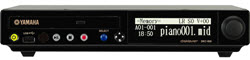
The DKC-850 can also be used as an add-on control unit for the Mark II Disklavier, connecting to the Mark II control unit with MIDI cables. Other than turning on the old control unit, the Disklavier owner can then ignore the old control unit and use the features of the DKC-850 instead. It should be noted, however, that DisklavierRadio and DisklavierTV are not supported in this configuration.
2018 - The DKC-900 Upgrade (only E3 or Mark IV)
The Yamaha DKC-900 is an upgrade control unit designed to bring modern Enspire functionality to older Disklavier E3 and Mark IV player piano systems. It replaces the older, bulkier control boxes with a streamlined, discreet unit that allows for wireless control via smartphones and tablets.
2012 - E3 – 2nd Generation
In 2012, Yamaha replaced the Mark IV series with standard and PRO versions of the E3. The standard version (complete with hammer sensors) was made available on the C2 and smaller grand pianos. All larger pianos (from the C3 on up) were outfitted with the PRO system.
About the same time as the introduction of the second generation E3s, Yamaha introduced a new feature for the Mark IV, E3 and DKC-850 called DisklavierTV. DisklavierTV is built on a technology called RemoteLive that enables the live streaming and archiving of video, audio and Disklavier performance data (e.g. MIDI data). By connecting a compatible Disklavier to both the Internet and to a computer, Disklavier owners can watch as well as listen to live and archived performances that are reproduced on their own piano — even performances that include instrumental and vocal audio.
The introduction of the second generation E3 coincided with the debut of a new series of grand pianos called the CX series. CX pianos are based on design principles that were previously featured on the CFX concert grand piano, an instrument that made its way to the concert stage in 2010.
CX series pianos were the result of years of research and development. The instruments feature a thickened back frame for improved support, providing a rich and resonant tone. They include a new, revolutionary piano wire as well as hammers based on those found in the CFX concert grand.
The ENSPIRE made its debut in 2016 and ushered in a new era of advanced player piano technology and wireless control. The ENSPIRE line consists of:
ENSPIRE PRO
Available in pianos of the C3X size and larger, the ENSPIRE PRO continues the tradition of PRO model Disklaviers, providing the highest resolution recording and playback paired with the highest quality acoustic pianos, now enhanced by Hammer Sensor Feedback.
ENSPIRE ST
Available in the C2X size and smaller grands as well as in 2 upright models, the ENSPIRE ST offers standard Disklavier features, including full recording and playback functionality. All ST models also include the SILENT feature.
ENSPIRE CL
The ENSPIRE CL is a playback-only model available in a 5′ grand.
Differences Between ENSPIRE models
Outwardly, the various ENSPIRE models are difficult to distinguish from traditional pianos that lack the Disklavier system. The typical control box that was visibly positioned under the keyboard of earlier models has been replaced with a very small and nearly invisible “switch box” positioned much farther under the keys:
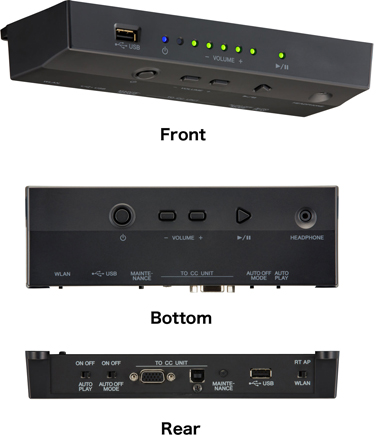
Although a few Disklavier features can be accessed using the switch box, it is expected that the user will normally use their own mobile device or even a computer web browser to interact with the instrument. Yamaha provides a custom ENSPIRE Controller app for both iOS and Android™ devices.
Communication between a mobile device or computer and the piano is established using normal network protocols. There are three connection methods for the ENSPIRE:
1) Using a standard Ethernet cable to a local area network. Computing devices with access to the same network can be used to control the piano.
2) Wirelessly to a local area network using the WPS protocol to a WPS-compatible router. Computing devices with access to the same network can be used to control the piano.
3) By creating its own wireless access point (i.e. private network) using the included UD-WL01 wireless LAN adaptor. Computing devices that connect to the ENSPIRE’s access point can be used to control the piano. Although the ENSPIRE Controller app for iOS and Android mobile devices is typically used to access the piano’s functions, it is also possible to access them with an HTML 5-compatible web browser running on any platform. The browser must be directed to the local IP address of the piano in order to establish a connection with the instrument.
The ENSPIRE is further distinguished by a number of new or substantially enhanced features, including:
Binaural CFX Piano Sample
When the piano is placed into Quiet mode, the instrument plays a new sample of the 9′ Yamaha CFX concert grand piano that can be heard on headphones. This sample was recorded binaurally (i.e. from the player’s perspective) and provides unprecedented realism.
Binaural sampling is a unique technique that captures the source instrument using equipment designed to replicate the auditory response of the human ear. In this way, the Quiet mode of the Disklavier ENSPIRE recreates the performance space of the Yamaha CFX concert grand, including the effects of incremental use of the sustain pedal and sympathetic string resonance.
Performance Voices
Similar to a feature that was available previously only on the Mark IV, the ENSPIRE has a set of performance voices that can be layered onto the native acoustic piano sound or used alone in Quiet mode.
In addition to the CFX concert grand voice, there are three electric pianos, two harpsichords, vibraphone, celesta, four pipe organs, jazz organ, strings, choir and synth pad.
Advanced DSP Servos
The original Disklavier PRO introduced moving magnet sensors and key sensors that enabled the instrument to monitor itself during recording and playback, effectively providing an internal feedback loop that ensured the highest quality recording and playback available at the time.
Over the years, Yamaha has continued the development and application of similar feedback loops in a variety of standard and PRO models. The ENSPIRE PRO has taken these innovations even further with the introduction of hammer sensor feedback in addition to key, pedal, and moving magnet monitoring.
USB Audio Recording
Previously available only on the Mark IV, the ENSPIRE has reintroduced real-time USB audio recording. While playing the instrument, you can simultaneously capture an audio recording that is created using the CFX concert grand piano sample or other chosen performance voice. The recording is saved to a connected USB flash drive. This feature provides, in essence, “microphone-free” audio recording.
Improved XG Tone Generator
The ENSPIRE also includes a more advanced set of 480 XG voices that were derived from the world-class line of Clavinova digital pianos from Yamaha.
Additional MIDI Features
The MIDI In and Out ports and the USB “To Host” port can be used simultaneously for MIDI communication. When coupled with either Yamaha Bluetooth® LE MIDI adapters (MD-BT01 or UD-BT01, available separately), wireless MIDI transmission and reception are possible.
MusicCast Whole-home Audio Integration
The ENSPIRE can be integrated into a wireless whole-home audio system using Yamaha MusicCast technology. By doing this, the user is no longer limited to the listening space of the acoustic piano but can enjoy piano music anywhere in the home via MusicCast wireless speakers and AV products. Control of the instrument is integrated into the MusicCast Controller app’s user interfaces, making control of the instrument easy and intuitive.
Today, the ENSPIRE PRO series of Disklavier pianos represents the flagship of Yamaha piano technology – combining the most advanced Disklavier system with the finest acoustic piano design from Yamaha.